


9 Therapist Website Examples Worth Learning From (2027)
Nine real therapist website examples, from solo practices to group, teen, perinatal and couples practices, and the specific things each one does well that you can borrow for your own site.

Most "best therapist websites" lists focus on color palettes and pretty photos. Those matter a little. But the websites that actually fill caseloads tend to share less glamorous traits: they say clearly who they help, they're honest about fees, and they make booking easy for someone who's nervous.
We looked at real, working therapy practice websites across different specialties and practice sizes. For each one, we note what it does well and what you could borrow. None of these sites are perfect, and that's the point. You don't need a perfect site. You need one that does a few important things right.
All examples were reviewed in October 2026. Practices update their sites often, so details may have changed since.
1. Shore Therapy Center for Wellness: a niche headline that does the sorting
Who: Dr. Corrie Goldberg, clinical psychologist, Evanston, Illinois, plus telehealth
Visit: shoretherapycenter.com (opens in a new tab)
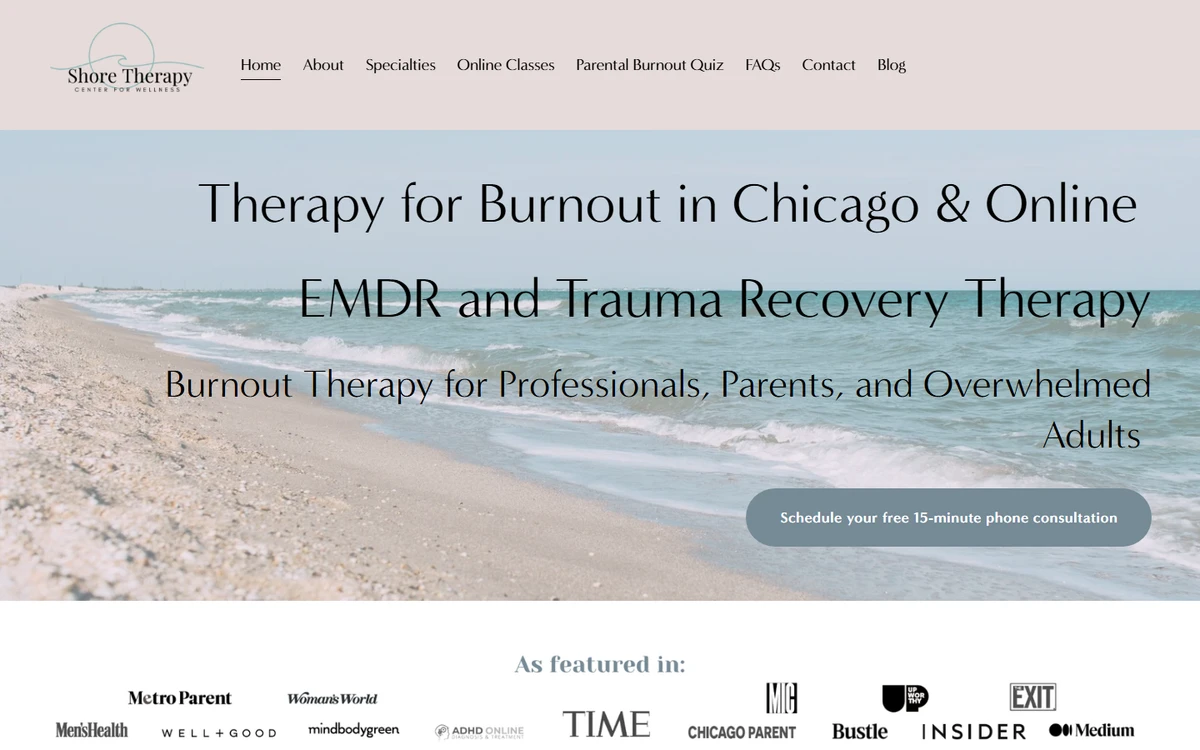
The homepage headline is "Therapy for Burnout in Chicago & Online," with EMDR and trauma recovery as a second focus. In one line, a visitor knows the specialty, the location and the format. Anyone who isn't burned out knows to keep looking, and anyone who is feels seen right away.
Borrow this: Lead with the problem you help with and where you help with it. The site also offers a free Parental Burnout Quiz, a gentle way for someone who isn't ready to book to stay in touch.
2. Dorlee Michaeli, LCSW: fees and next steps, no guessing
Who: Solo practice offering EMDR and anxiety therapy, virtual across New York, New Jersey and Illinois, in person in Chicago
Visit: dorleemichaeli.com (opens in a new tab)
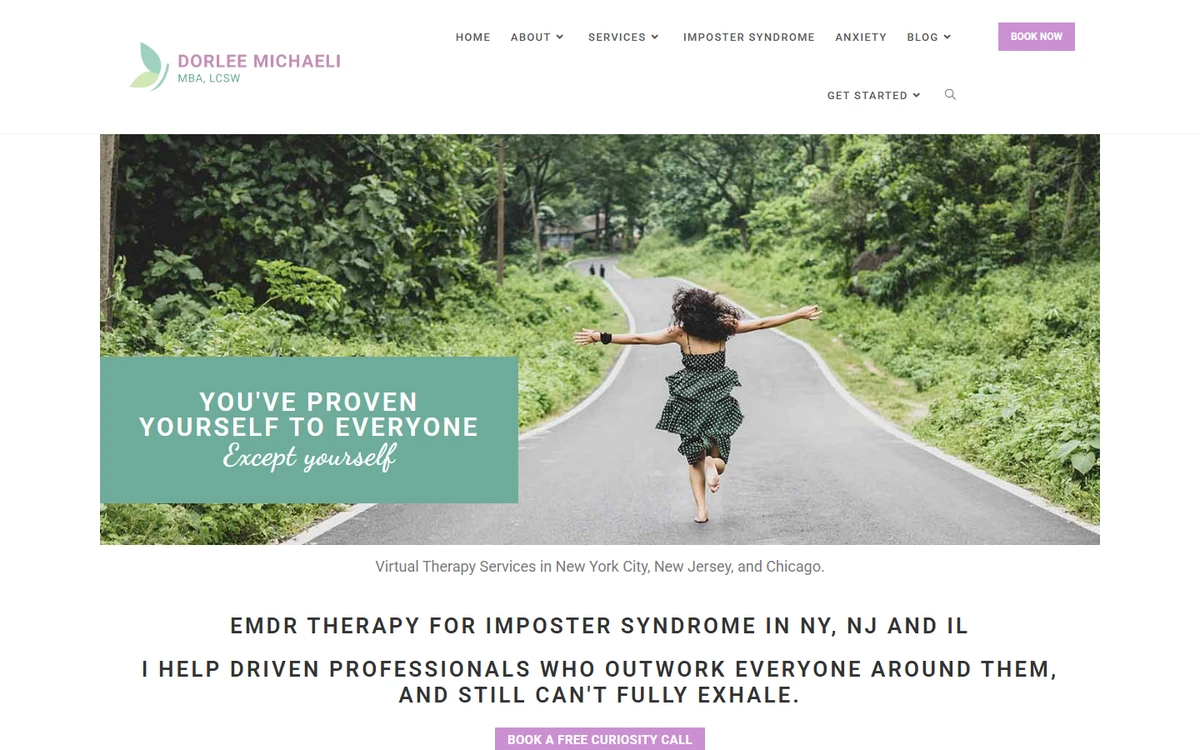
The contact page is headed "Your Next Step Is a 20-Minute Conversation," and it delivers on that promise. Session fees are listed, limited sliding-scale spots are named with their price, the out-of-network and superbill process is explained, and the cancellation policy is right there. There's no "call to discuss rates."
Borrow this: Put your fee, your insurance status and your free-call offer on the same page as your booking button. It removes the biggest reason people hesitate.
3. Full Bloom Counseling Group: a group practice that still feels personal
Who: Group practice in Denver and Boulder, Colorado, with online therapy statewide
Visit: fullbloomcounseling.com (opens in a new tab)

Group practice sites often turn into a wall of headshots. Full Bloom balances its team of therapists with a clear list of specialties, from trauma and perinatal care to ADHD and Gottman-trained couples work, and names specific approaches like EMDR and Brainspotting. It's also upfront that it's private pay, promising clear rates with no surprise fees.
Borrow this: If you run a group, organize the site around what clients are struggling with first, then introduce the clinicians who help with each. The practice also publishes a helpful article on insurance and superbills in Colorado, which answers a real question before anyone has to ask it.
4. The Center for Postpartum Family Health: speaking to a moment in life
Who: Perinatal mental health group practice in Houston, The Woodlands and Spring, Texas, plus statewide telehealth
Visit: cpfh.org (opens in a new tab)
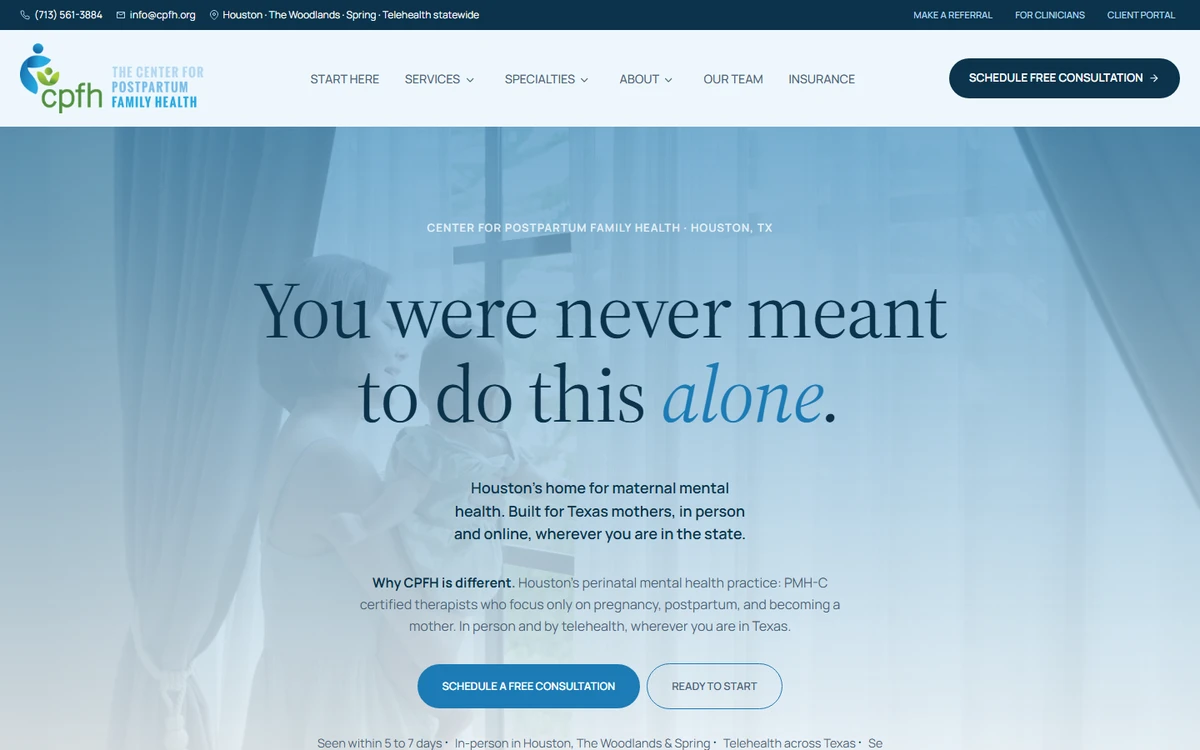
The headline, "You were never meant to do this alone," speaks straight to an exhausted new parent. The site names specific concerns (postpartum anxiety, postpartum OCD, birth trauma, NICU support, pregnancy loss), lists the insurance plans it takes, mentions a sliding scale, and tells people how quickly new clients are usually seen. It also notes clinicians' perinatal mental health certification and offers a free downloadable guide for the fourth trimester.
Borrow this: Tell people how soon they can be seen. For someone in a hard season, "new clients usually within a week" is often the most reassuring sentence on the page.
5. Austin Teen Therapy: two audiences, handled clearly
Who: Group practice for pre-teens, teens, young adults and families, with virtual sessions across Texas
Visit: austinteentherapy.com (opens in a new tab)

Teen therapy sites have a tricky job: the client is the teen, but the person searching is usually a parent. Austin Teen Therapy speaks to both, with a welcoming headline, a clear list of concerns, and resource lists for teens and for parents. It states plainly that it doesn't take insurance, explains its free 30-minute consultation, and sets expectations about how quickly it responds.
Borrow this: If someone other than the client usually makes the first call (a parent, a partner, an adult child), write a section just for them.
6. Breath of Hope Counseling: a specialty page that sells a specific service
Who: Gottman couples intensives in San Antonio, Texas, with virtual sessions in Texas and Alabama
Visit: Gottman Couples Therapy Intensives (opens in a new tab)

This is a great example of a single service page done well. It explains who intensives are for, what a typical day looks like, and the price of each package. It's also honest about who an intensive isn't right for, such as couples dealing with active addiction or violence. That kind of honesty builds trust and saves everyone time.
Borrow this: For any premium service, spell out the format, the price and who it's not for. Clear limits make the offer feel safer, not smaller.
7. Lisa Chen & Associates: a free resource that earns trust
Who: Group practice in Hermosa Beach and Pasadena, California, with telehealth across the state
Visit: Free Gottman Couple Exercises (opens in a new tab)
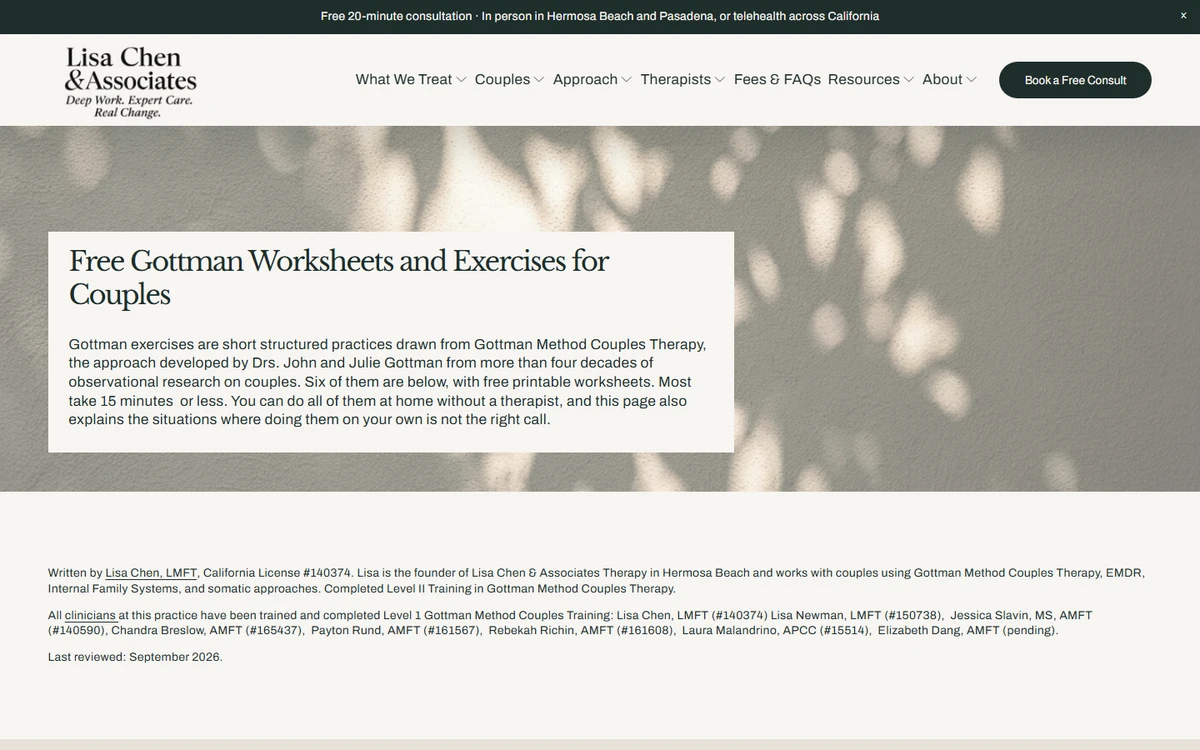
Instead of a vague blog post, this page gives couples six short, practical exercises with printable worksheets, most of which download without an email. It also explains when self-guided exercises aren't enough. The page lists clinicians' training levels and a fee range, and invites people to book a free consult.
Borrow this: Create one genuinely useful free resource tied to your specialty. People who use it remember you, and pages like this tend to attract searches long before someone is ready to book.
8. Timely Therapy: warm, simple, and easy to act on
Who: Matthew Erdman, solo practice in Seattle, Washington, in person and online
Visit: timelytherapy.com (opens in a new tab)
Disclosure: Timely Therapy is a wwisermind client.
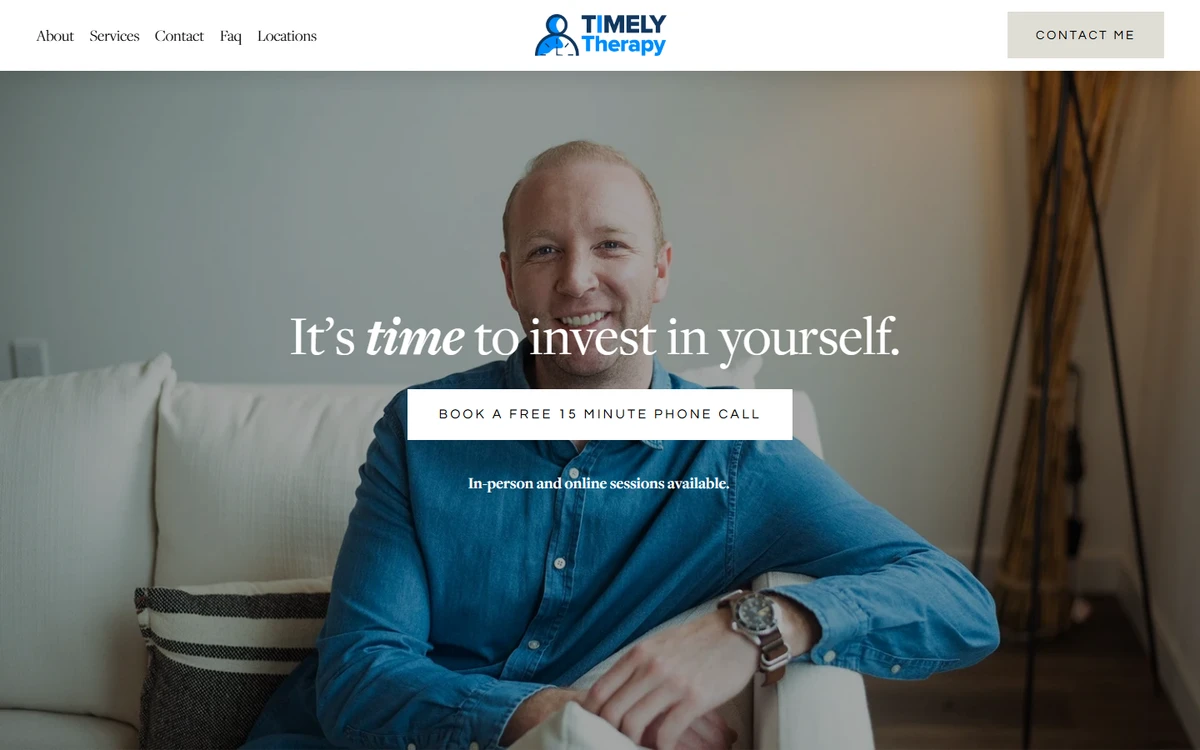
The homepage opens with "It's time to invest in yourself," then speaks directly to how someone might be feeling: "Life doesn't have to feel this hard!" It names the concerns it helps with, welcomes clients of every background, and makes the next step simple with a free 15-minute call. Evening, weekend and sliding-scale options are mentioned up front, which answers practical questions early.
Borrow this: Mention scheduling flexibility near the top. For busy adults, "evenings and weekends available" can matter as much as your specialty.
9. Great Lakes Wellness Counseling: local and specific
Who: Group practice in Jenison, Michigan, serving West Michigan in person and all of Michigan online
Visit: greatlakeswellnesscounseling.com (opens in a new tab)
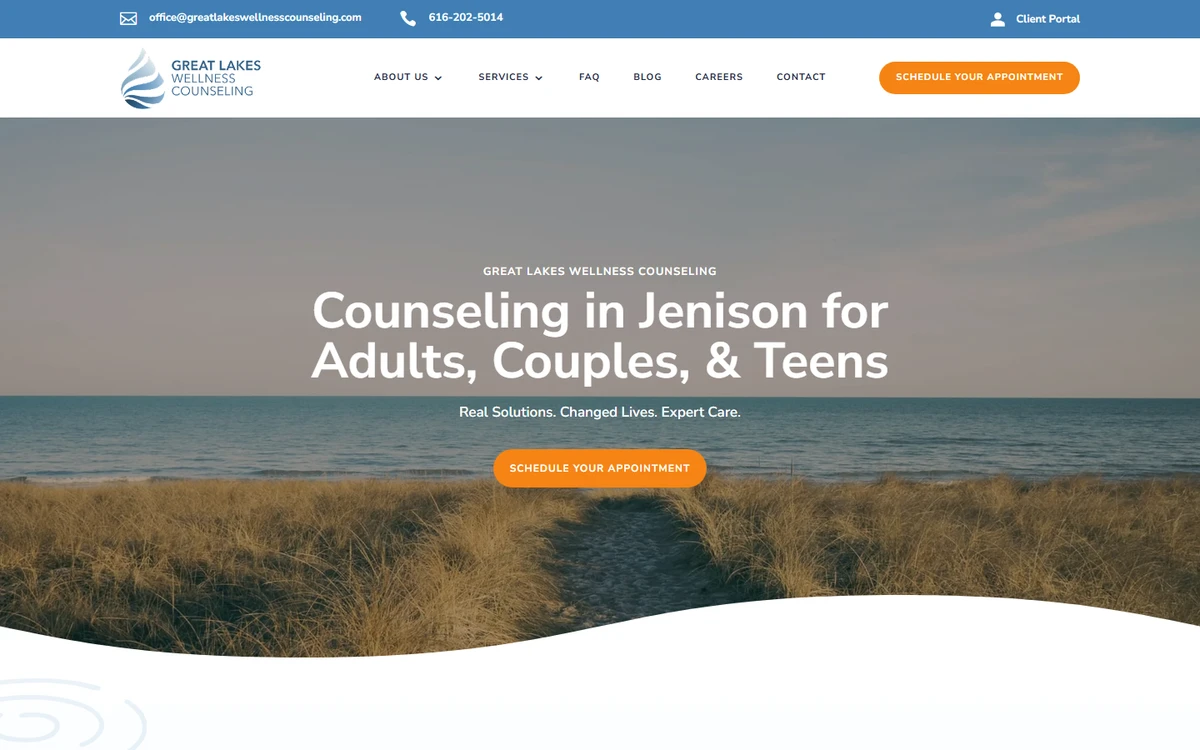
The headline, "Counseling in Jenison for Adults, Couples, & Teens," is exactly what someone in that area would search for. The site lists the nearby towns it serves, explains its three-step intake process, and gives each clinician a profile with their credentials.
Borrow this: Name your town and the nearby towns you serve. It helps local search, and it tells a visitor right away that you're close by.
What the best therapist websites have in common
Looking across all nine, a few patterns stand out:
- A specific headline. Who you help, with what, and where. Not "Welcome."
- An honest money section. Fees, sliding scale, insurance or out-of-network details, in one place.
- A low-pressure first step. A free 15 to 30 minute consultation, clearly offered.
- Pages built around problems. One page per specialty, written for the person, not a colleague.
- Something useful for free. A quiz, a guide, worksheets or helpful articles.
- Clear expectations. How fast you reply, how soon people can be seen, and who you're not the right fit for.
Notice what's not on that list: fancy animations, stock photos of people meditating on a beach, or a long credentials section at the top. Those rarely decide whether someone books.
A 10-minute check for your own website
Open your site on your phone and look for these:
- Your first line says who you help, with what, and where
- A booking button is visible without scrolling
- Your fees or insurance details are easy to find
- Each main specialty has its own page
- There's a real, recent photo of you
- You say how quickly you respond
- Crisis information is easy to find
If you're missing more than two of these, your website is probably costing you clients. Our free guide, The 2027 Full-Caseload Plan, walks through fixing each one in about an hour a week.
Frequently asked questions
What makes a good therapist website?
A good therapist website says clearly who you help and where, explains fees and insurance, offers an easy first step like a free consultation, and has a separate page for each specialty. Design matters less than clarity and trust.
What pages should a therapist website have?
At minimum: a homepage, an About page, one page per specialty, a fees and insurance page, a contact or booking page, and a privacy policy. Many practices also add FAQs, a blog or resources page, and a page for each clinician in a group practice.
Should therapists show fees on their website?
Most clients prefer it. Listing your fee, sliding scale and insurance or out-of-network details reduces hesitation and filters out people who aren't a fit, which saves time on consult calls.
What's the best website platform for therapists?
It depends on how much control and support you want. We compare the main options in WordPress, Squarespace or Custom?
How much does a therapist website cost?
It ranges widely, from a do-it-yourself template to several thousand dollars for a custom design. A fast, done-for-you option like our One Week Website sits in the middle, with transparent pricing.